27 Jan, 2026
What is a 1 in 100 year storm?
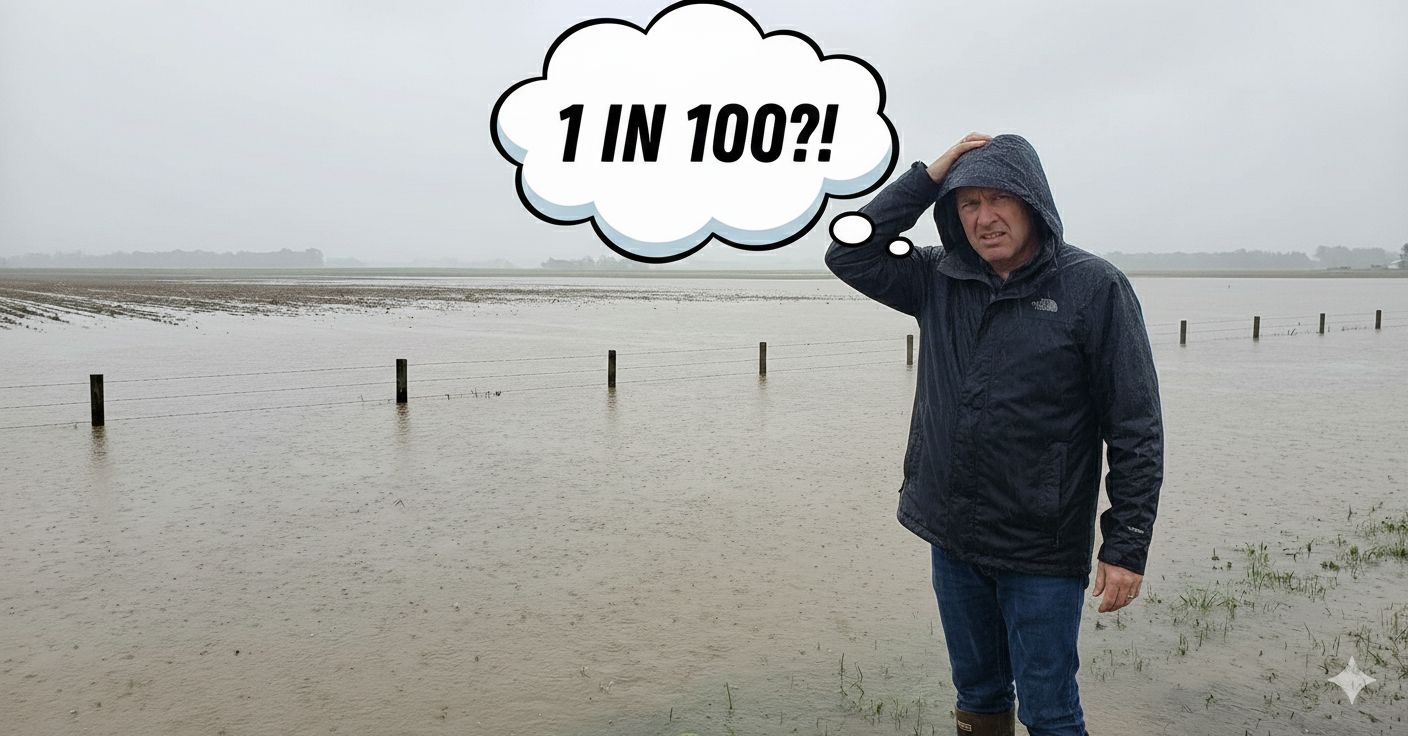
General opinion seems to be that a 1 in 100 year storm (or 1% chance event), will be something that only happens once in a 100 year period. So, if there is such an event in recent times, it would then be very unlikely to happen again for a very long period.
Unfortunately, this is not the case, as the terminology relates to an annual exceedance probability (AEP) of 1%. The reality of which means that there is a 1 in 100 chance of such an event happening in a single year (quite a low likelihood). However, as this is an annual probability, there is the same chance of occurrence the next year and the year after – so similar to tossing a coin or the roll of a die.
So, in a 10 year period there is actually a 10% chance of a 1 in 100 year event and in a 100 year period there is a 63% chance
Based on this, the compound effect of probability can be surprising. So, in a 10 year period there is actually a 10% chance of a 1 in 100 year event and in a 100 year period there is a 63% chance – which feels a lot more disconcerting than thinking in 1 in 100 terms over the same period.
To provide some context relating these probabilities to flood zones for planning /development purposes:
The impact of climate change is also making these events more frequent and therefore an understandable concern during the planning process.