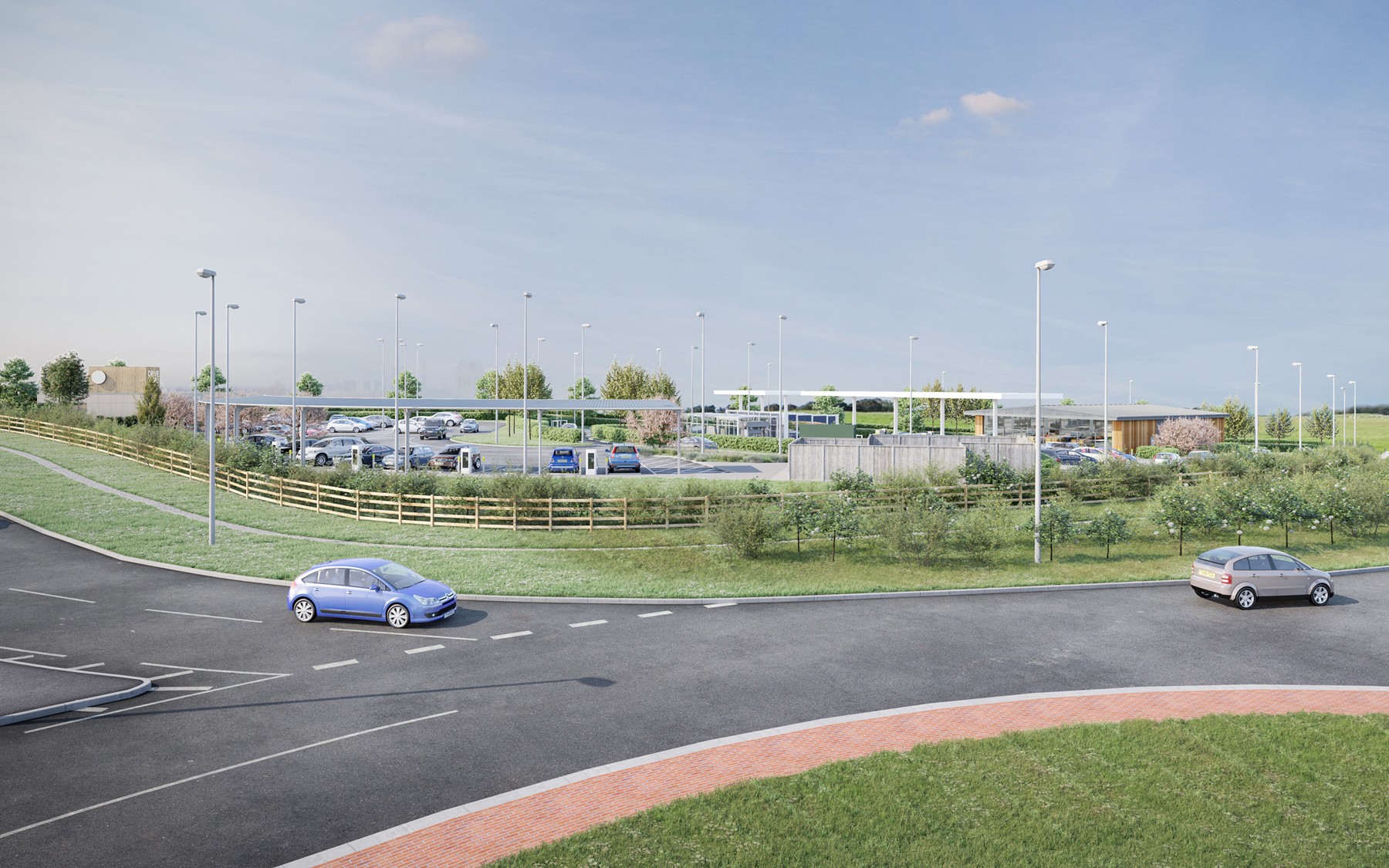
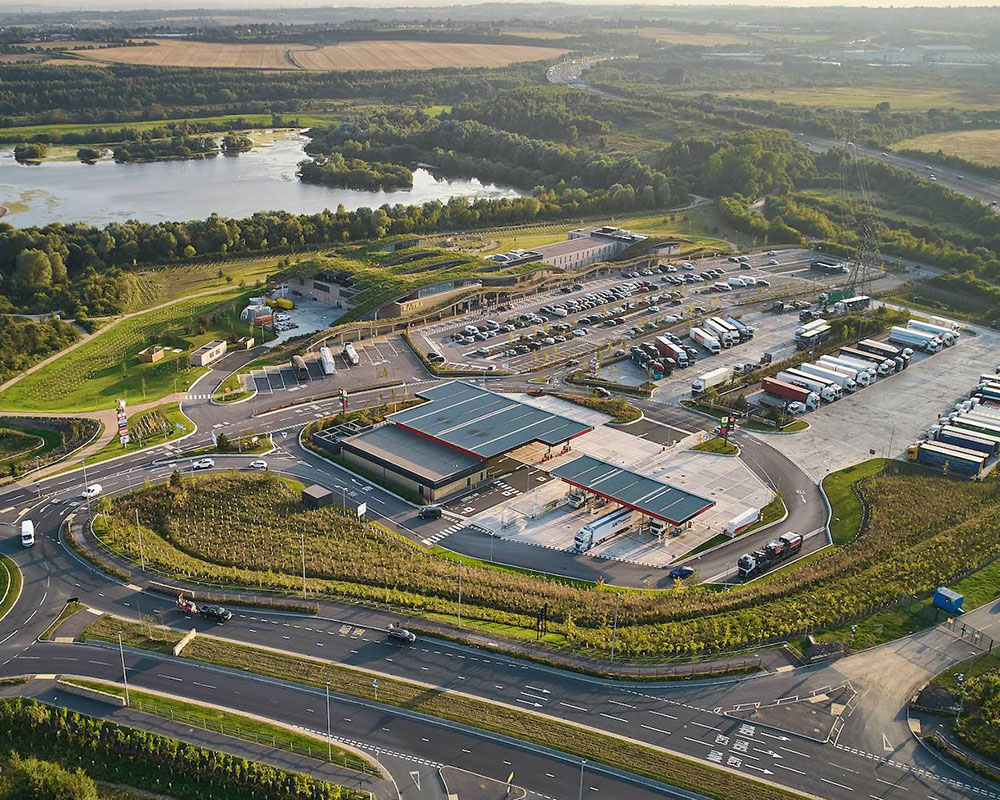
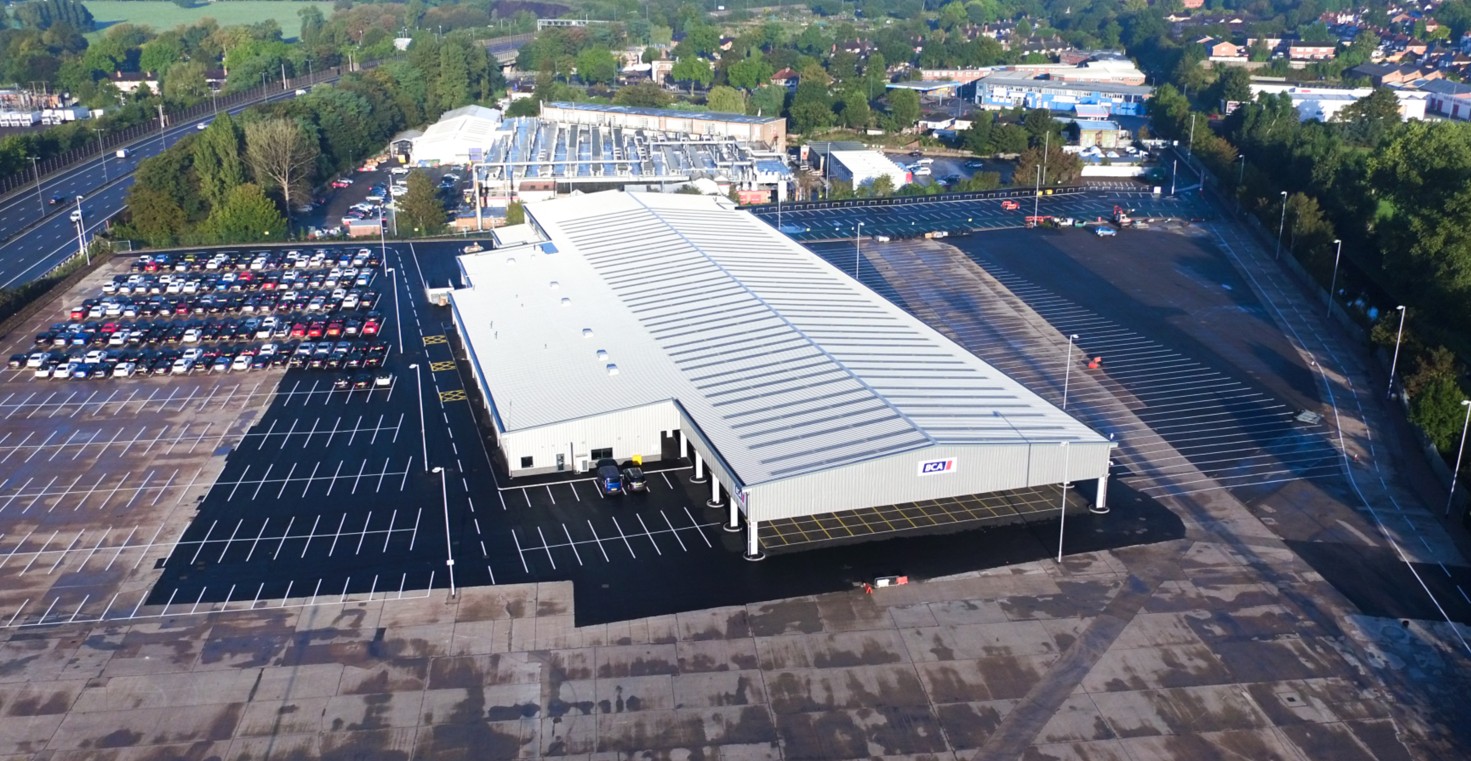
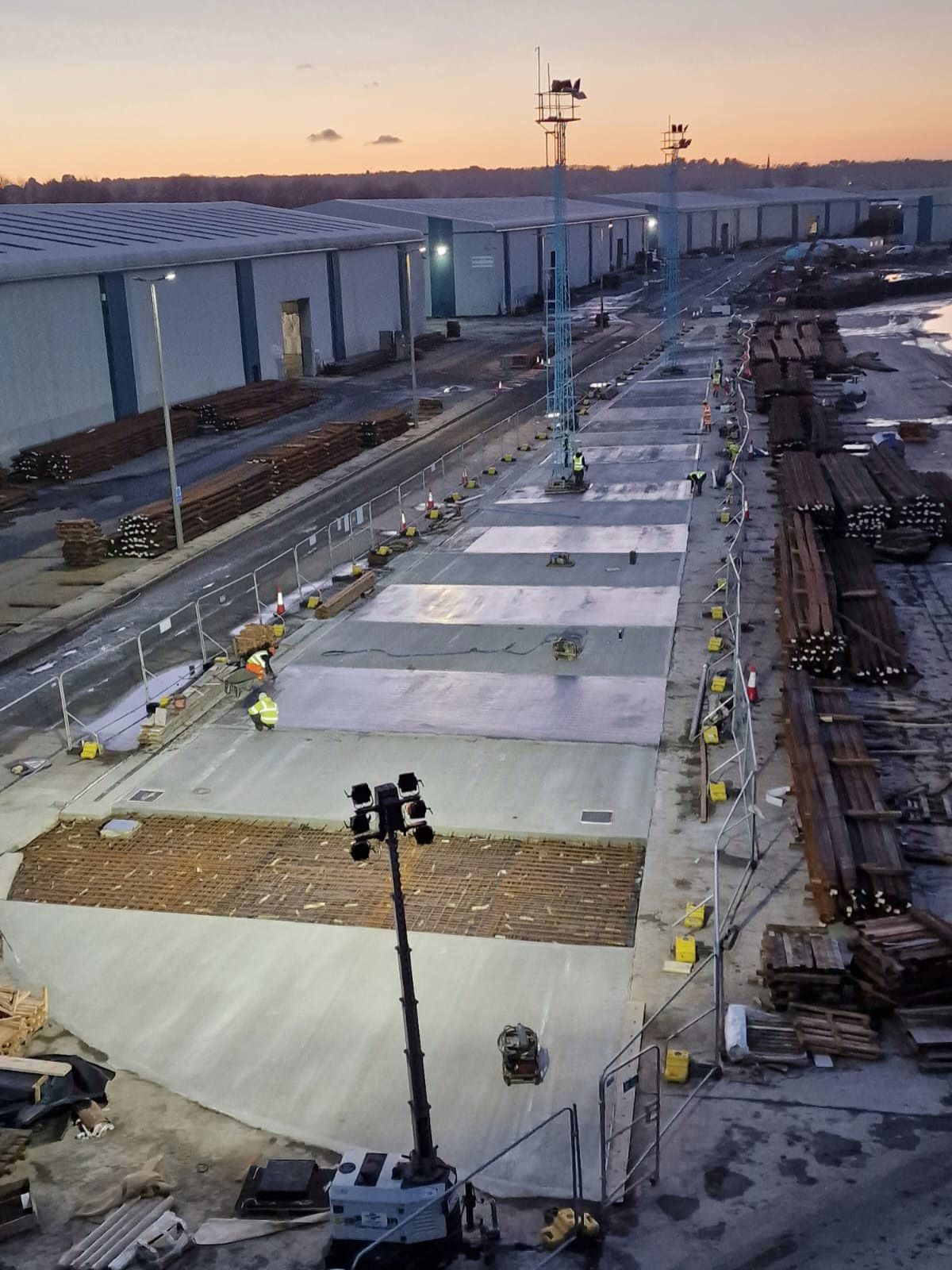
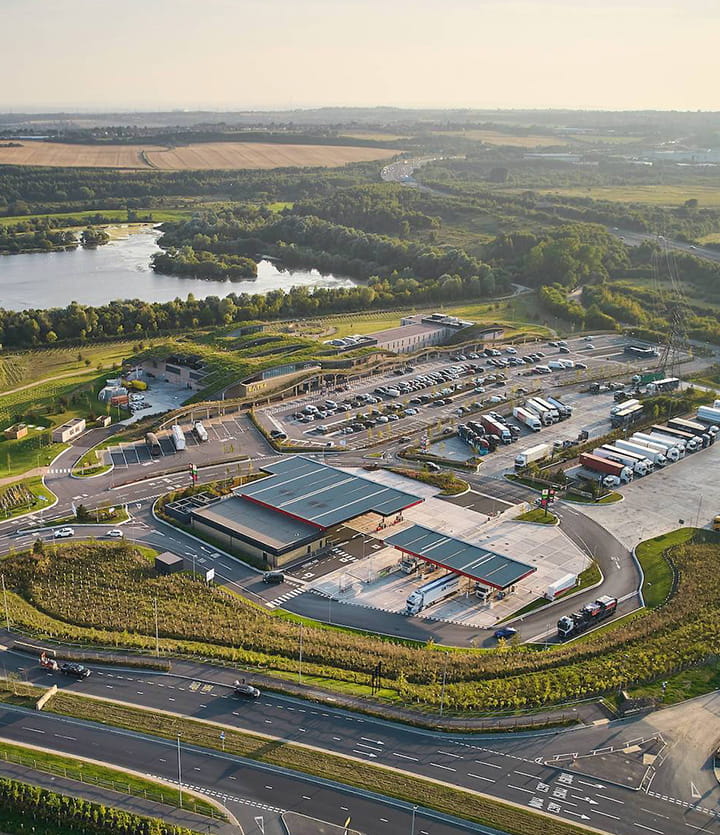
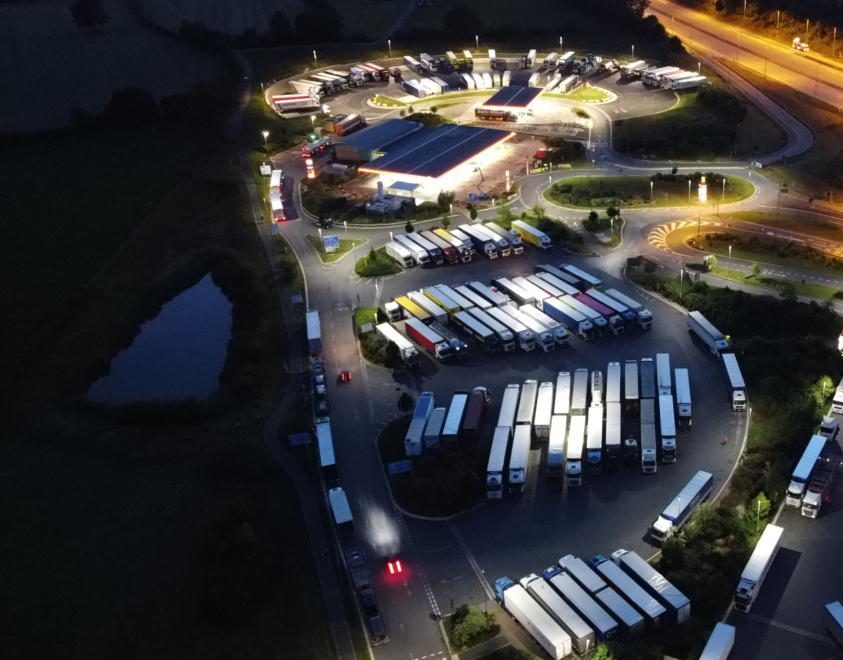
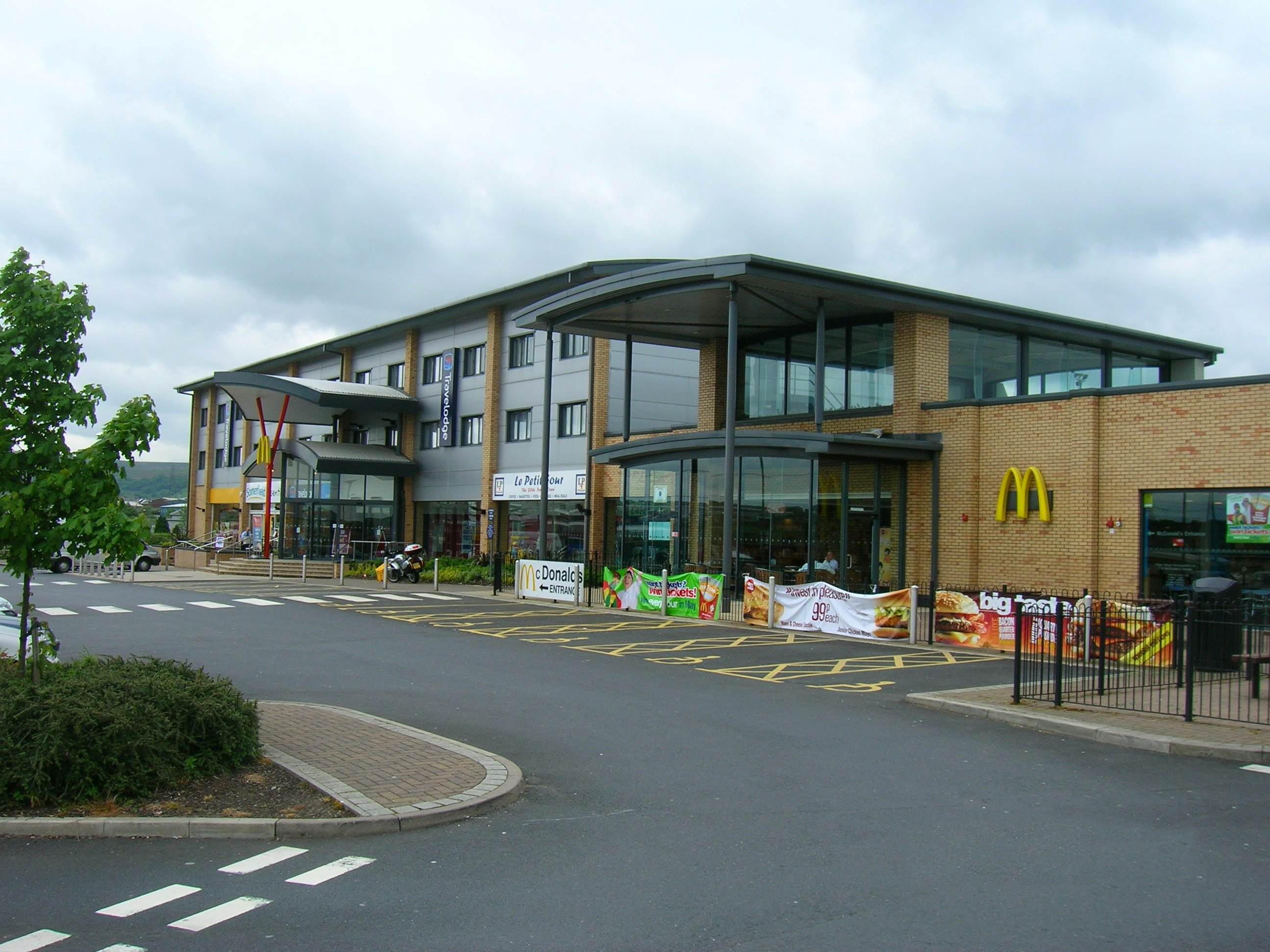
Transport engineering shapes how sites connect to the world around them. Get it right and traffic flows, access works and planners are happy. Get it wrong and delays follow. We provide transport engineering for developments across the UK – airports, car parks, railways, highway design, fuel and EV charging sites, park-and-ride facilities and more.
Roads, junctions, and access arrangements need to do more than meet standards on paper. They need to work in practice – for drivers, pedestrians, cyclists, delivery vehicles, emergency services and everyone else trying to use the site.
As transport engineers and highway designers, we develop access layouts, junction designs, and servicing arrangements that reflect real movement patterns and operational needs. That means understanding how vehicles arrive, circulate and leave. How pedestrians cross. Where conflict points are. What happens at peak times. And how the highway network outside the site copes with the additional demand. We work across development scales – from a single access point for a small commercial site to complex highway schemes serving major developments. The scale changes. The need for clear, practical design that holds up to scrutiny doesn’t.

Transport schemes involve some of the most complex approval processes in development. Local highway authorities have detailed standards, and planners want to see that transport impacts have been properly assessed and mitigated.
We don’t just design to the point of submission – we see schemes through the process. That means working closely with local authorities from early engagement through technical review, design iteration, and formal approval. We know what authorities want to see, how to respond to technical objections and how to keep approval processes moving without unnecessary delays.
Transport projects sit at the point where development meets movement – vehicles, pedestrians, public transport, freight, airside operations. They demand technical compliance, careful coordination and a clear understanding of how infrastructure performs once it’s in use.
We support a wide range of transport and access schemes, including:
Clients value our balanced approach. We combine a solid grasp of standards and approval processes with practical delivery experience. That means we don’t just design to pass a policy test – we design solutions that function day to day.
Transport engineering isn’t just about roads. It’s about keeping projects moving – through design, through planning, through construction and through adoption.
A transport planning consultant assesses how people, vehicles and service traffic will access and move around a development – and how that movement affects the wider network. This can include transport assessments, junction modelling, access design, parking strategies, servicing layouts and sustainable travel planning. The goal is to ensure a scheme operates safely, efficiently and in line with planning policy and highway standards.
As early as possible. Early input allows access points, internal road layouts, servicing routes and parking strategies to be shaped before planning submissions are made. Bringing transport expertise in at feasibility stage helps identify constraints, manage risk and avoid expensive redesign later, particularly where highway approvals or junction capacity are sensitive issues.
Yes. We regularly engage with local authorities, highways departments and statutory consultees across the UK. We prepare technical submissions that meet approval requirements and respond clearly to consultation queries, helping projects move through planning and adoption processes with fewer delays.
We do. We produce Transport Assessments, Transport Statements and Travel Plans to support planning applications, demonstrating how developments will operate and how sustainable travel can be encouraged.
Absolutely. Our transport engineering experience extends to airports, airside infrastructure, EV charging hubs, park-and-ride facilities, rail-related works and complex multi-modal schemes – wherever movement and access are critical to success.