12 Aug, 2026
The next phase of terminal transformation takes off at Leeds Bradford Airport
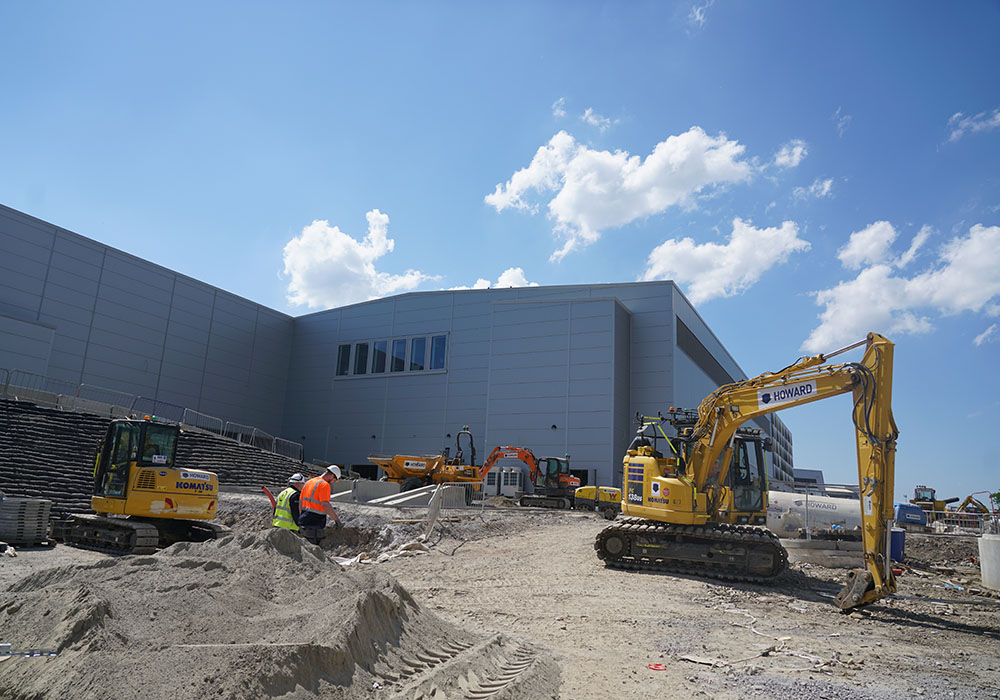
Following the completion of Phase One, which delivered a new terminal extension and link bridge, attention has now turned to the existing terminal, where the challenge is no longer building new space, but carefully reshaping what already exists.
The next phase of works will completely reshape how passengers move through the airport, introducing a new Central Security Area, improved circulation routes and refurbished passenger spaces. It’s a complex project, made even more challenging by the fact that the airport continues to operate throughout construction.
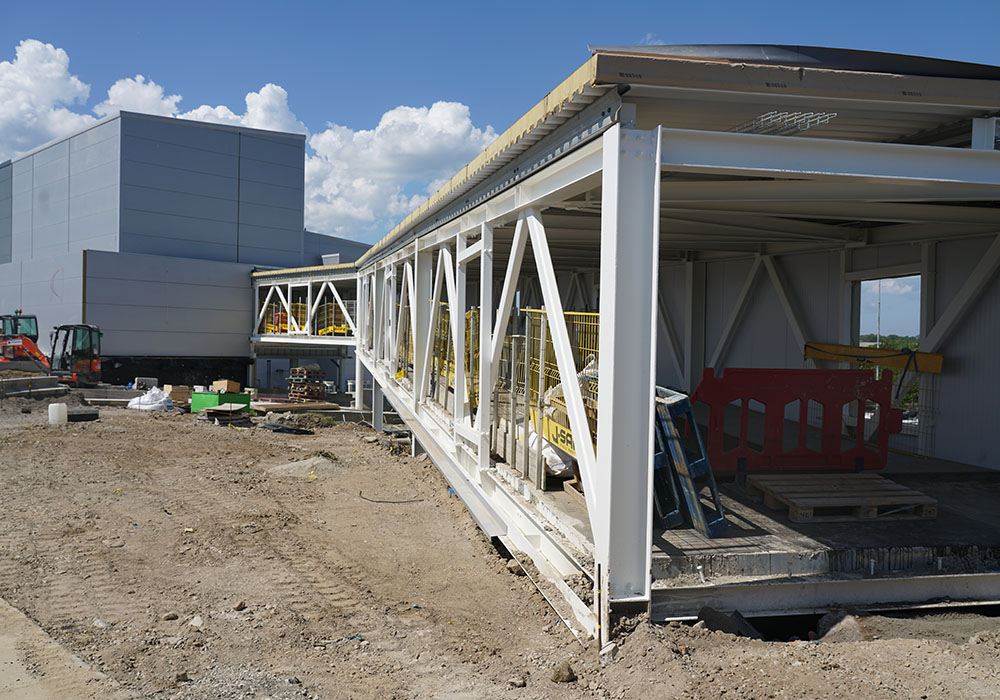
The first phase of the project focused on creating the new terminal extension and the link bridge connecting it to the existing building.
While this introduced valuable new passenger space, it also established the framework for everything that follows. The extension has been designed to integrate with the existing terminal once the refurbishment is complete, creating a more connected and efficient passenger journey through the airport.
For us, the challenge was ensuring the new structure could integrate with the existing terminal while allowing the flexibility needed to deliver the ambitious next stages of redevelopment.
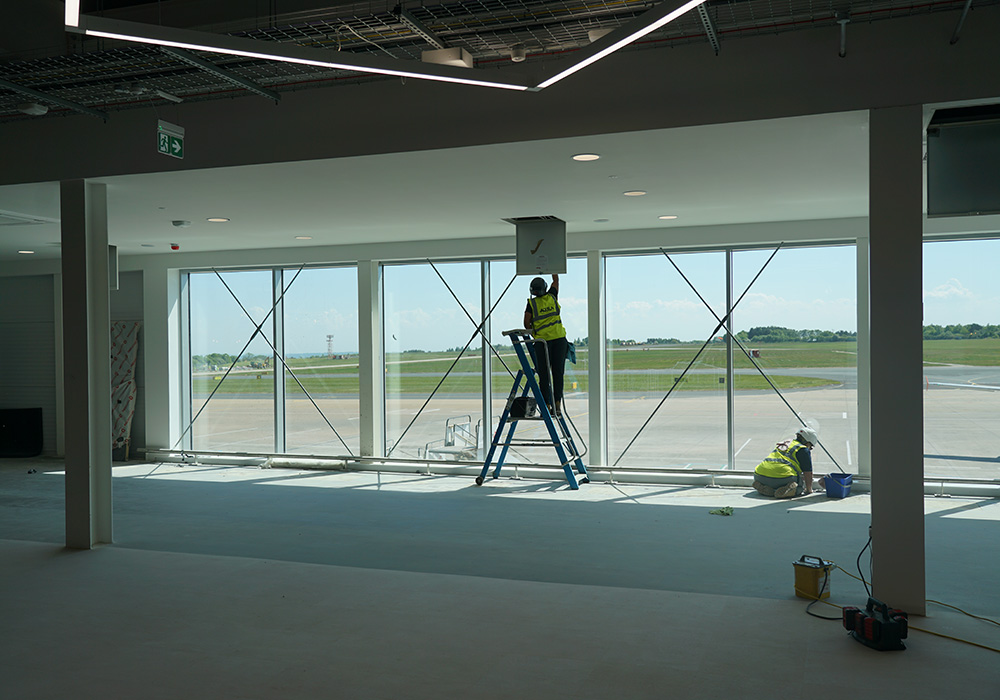
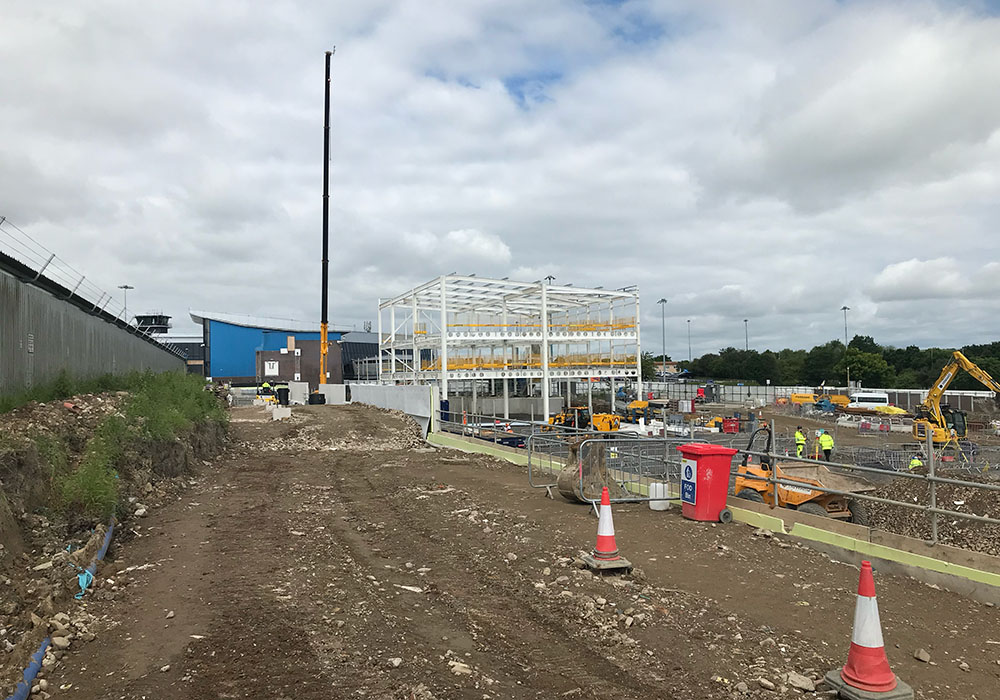
With the extension complete, our focus has shifted to the structural redevelopment of the original terminal building.
One of the biggest elements of this phase is the creation of a new Central Security Area. The former baggage reclaim hall is being completely reconfigured into a modern security screening facility, requiring significant alterations to the existing structure while working within the constraints of a live operational building.
Alongside this, a new Vertical Circulation Core is being introduced, providing new stairs and lifts that connect passengers directly from security to the departure level. Although these new routes will eventually feel simple and intuitive, creating them involves carefully opening up existing spaces and adapting the structure to suit an entirely new layout.
One of the biggest engineering challenges has been adapting a building that has evolved over more than 60 years.
Different sections of the terminal were constructed during different periods, beginning in the 1960s before expanding through the 1980s and later developments. Each phase brought its own structural approaches, materials and layouts, all of which need to work together as part of a single modern terminal.
As part of the refurbishment, internal spaces are being opened up, outdated layouts removed and passenger routes reconfigured. Once complete, travellers will move naturally through World Duty Free, retail and food and beverage areas before continuing into the newer extension and gate lounges.
Projects like this are a reminder that refurbishment is rarely about starting again. It’s about understanding what’s already there and finding the best way to adapt it for the future.
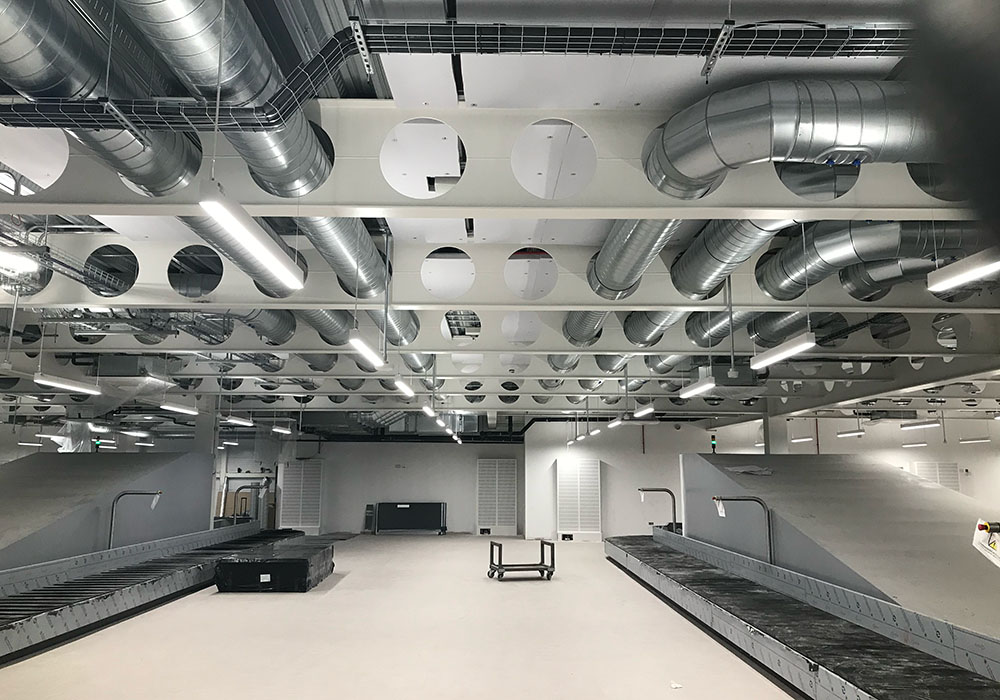
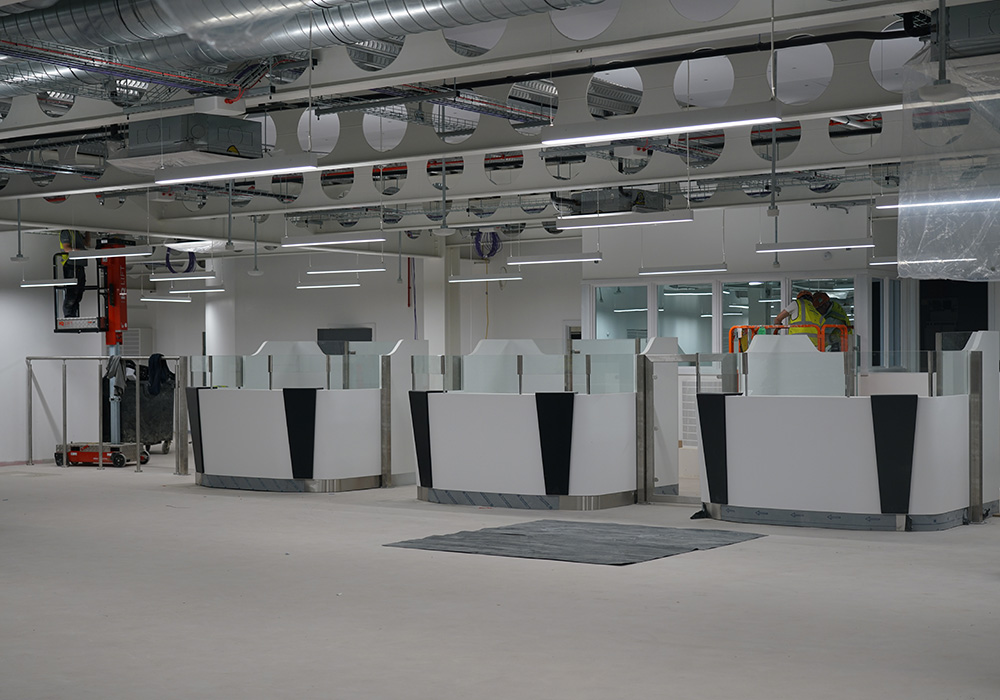
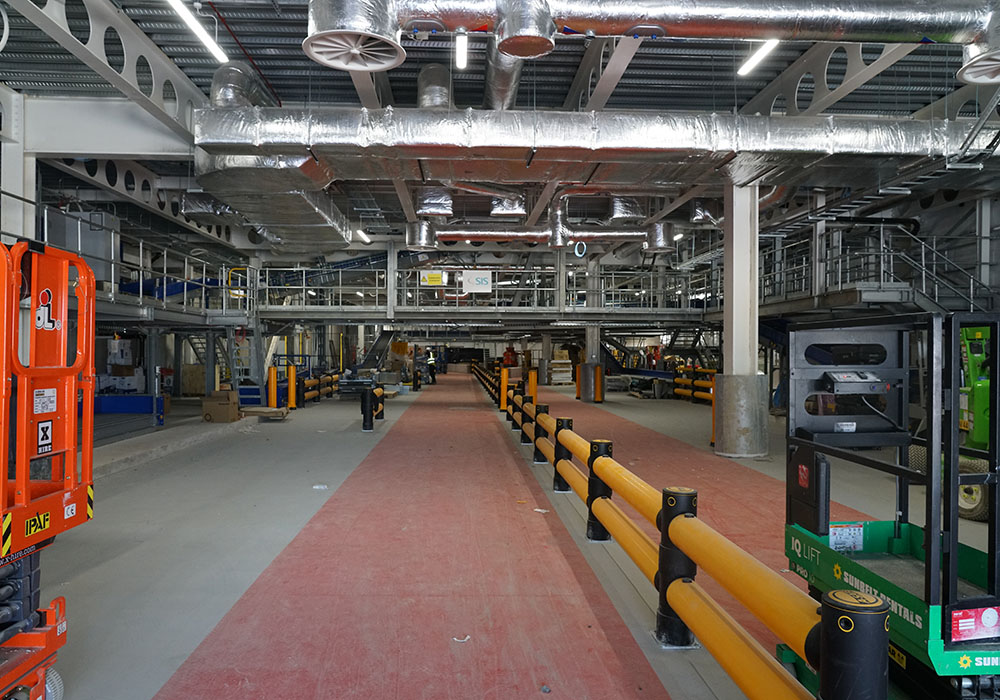
Unlike many construction projects, Leeds Bradford Airport doesn’t pause while work takes place.
The redevelopment is being carefully delivered in a series of managed phases, allowing completed areas to open before work begins elsewhere. Temporary passenger routes and construction zones have been introduced to keep the airport operating safely while redevelopment continues around them.
It requires careful planning and coordination throughout every stage of the programme, balancing construction activity with the day-to-day operation of a busy international airport. As each section is completed, passengers begin using the new spaces before work progresses into the next area, gradually transforming the terminal while keeping disruption to a minimum.
The redevelopment is expected to continue through to late 2027, with a series of smaller phased openings taking place along the way.
When complete, passengers will benefit from a much clearer route through the airport, from a new central security area and improved circulation spaces to enhanced retail, food and beverage facilities, all seamlessly connected to the new terminal extension.
It’s a fascinating, challenging project to be involved in, demonstrating the complexities of modernising existing infrastructure while keeping it fully operational.
We’re looking forward to seeing the transformation continue as Leeds Bradford Airport takes shape for the future!