27 Nov, 2026
An industry moving at two speeds: what the Autumn 2026 Budget means for housing developers

The long-awaited Autumn Budget was finally announced on Wednesday 28th October, followed a week later by the Bank of England’s first interest rate rise in three years. For housing developers, it was one of the most anxiously awaited in a while.
We’ve certainly felt uncertainty among our clients and partners, but it hasn’t played out the same way for everyone. Across the housing developers we work with, from private housing and social housing to retirement living and student living, we’ve been seeing a 50/50 split. Some housebuilders have been saying stop. Others have been saying carry on, with government funding giving them the confidence to keep going.
Now the dust has settled on both, we’re looking at what they mean for housing development.
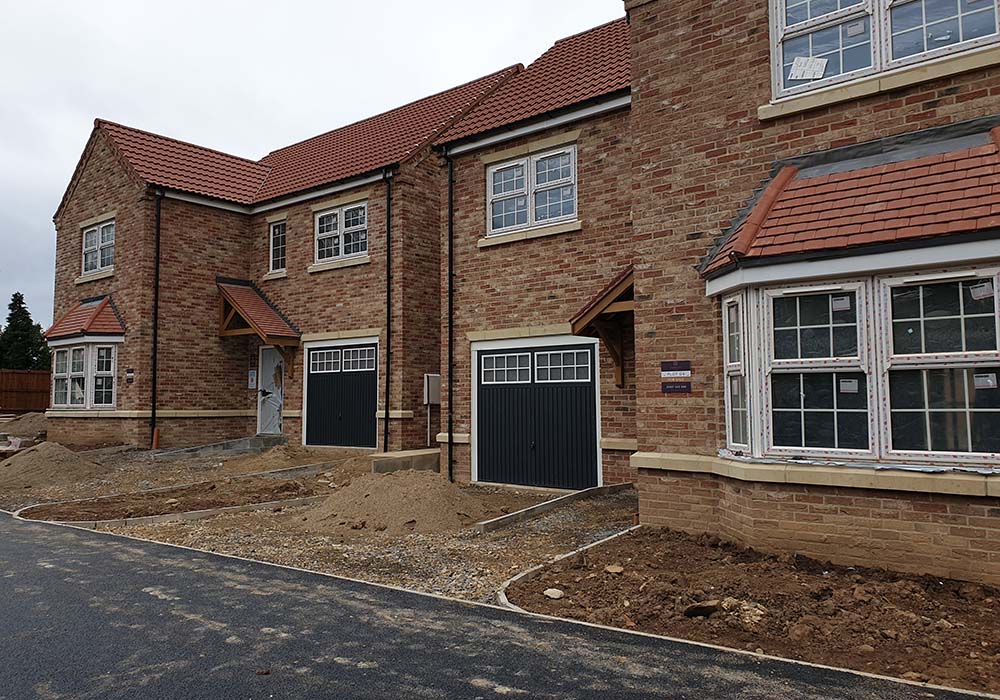
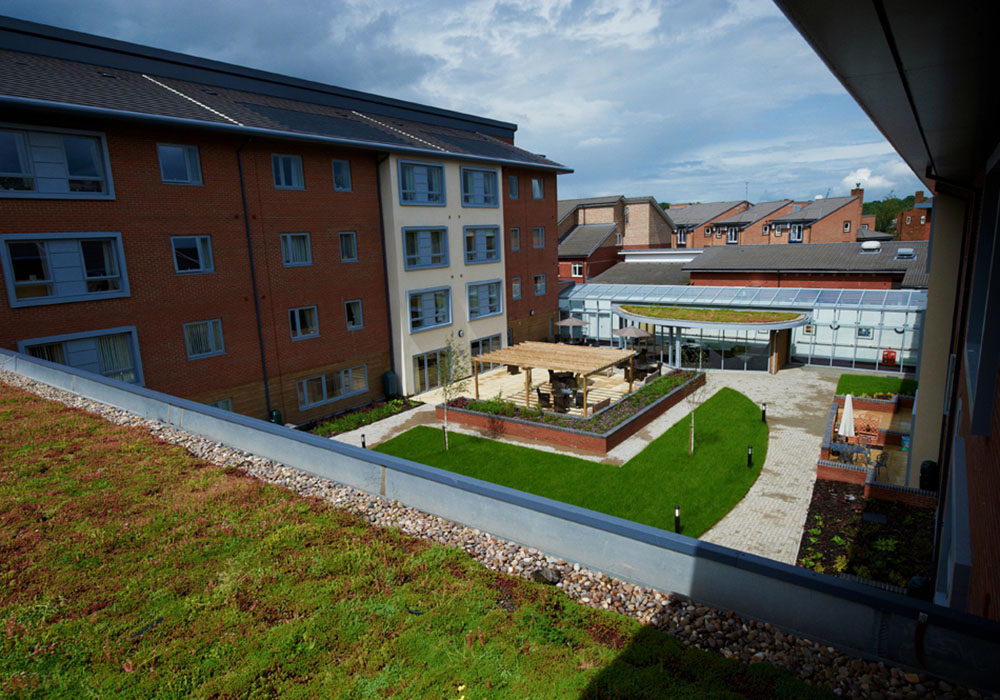

In the run-up to the Budget, plenty of the housebuilders we work with put things on hold, and it was rarely down to the sites themselves. The issue was uncertainty: nobody wanted to commit to land, design and finance without knowing what the government was going to do. When you’re already working to tight margins, a few months of “wait and see” was a sensible call.
The NHBC’s latest figures show that 26,231 new homes were registered across the UK in Q3, 13% fewer than in the same period last year. Smaller housebuilders are feeling it too; 96% of SME developers said current market conditions were making them more cautious about bringing forward new sites, while 61% expected to start fewer homes over the next three months. It backs up what we’ve been hearing across the sector: developers aren’t short of sites, just certainty.
But waiting isn’t free either. Materials, labour and finance rarely get cheaper while a site stays still, so a scheme that was viable last year may need value engineering to work now. Planning doesn’t help – at the moment, if you get planning consent within a year, you’ve done well, and most permissions lapse if work hasn’t started within three years. A long pause can mean going back to the start of a process that was already slow.
On clay soils, like much of Leeds and Yorkshire, even trees and shrubs growing back on a dormant site can change how deep the foundations need to go, because their roots draw moisture out of the clay and cause it to shrink.
And some businesses didn’t make it through: in a few cases where developers have gone under, investors have stepped in to finish those schemes, and that brings its own challenges. Open excavations fill with water, exposed steel can start to corrode, and a new contractor won’t want to take responsibility for work they didn’t oversee without proof it was done right. For taller buildings like student accommodation, the Building Safety Act also means new duty holders and a “golden thread” of information that needs to be in order. Where records are incomplete, that can mean opening things up to see what’s actually there.
That’s why those investors have often come to us to help get them back on track: we already know the buildings and can pick things up quickly. These are homes and care facilities people are waiting on, so it’s work we’re proud to help deliver, but it shows how thin the margins have become.
"The last four or five months have been really hard. It isn't just what's happening in housing, it's everything going on in the wider world, because it affects everything."
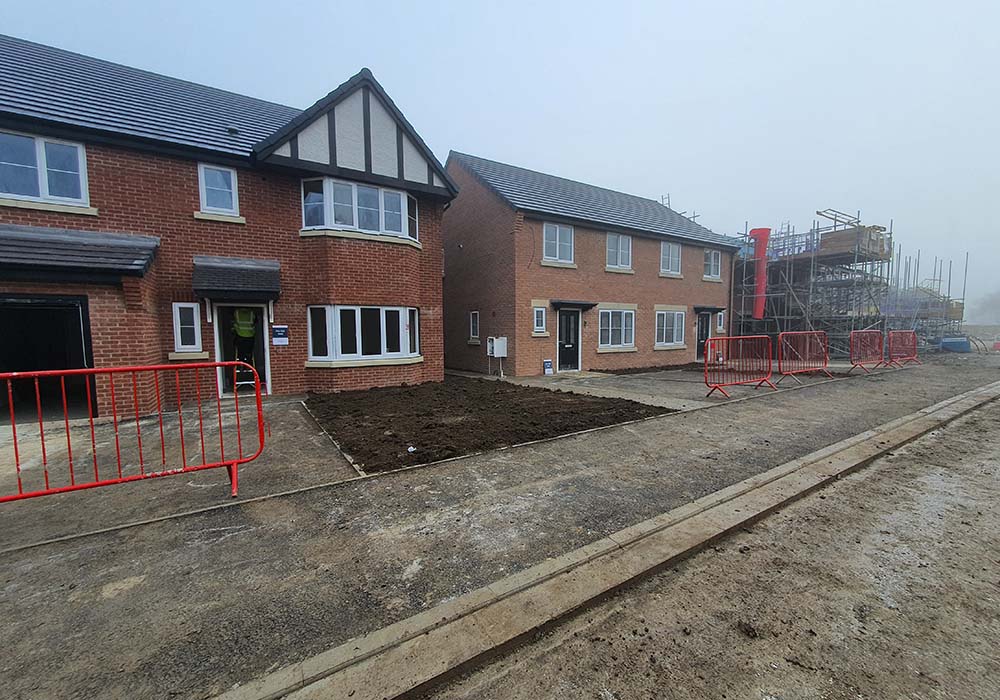
It wasn’t all doom and gloom, though. The other half of our housing clients carried on, and the reason was simple: the government was putting money in. Housebuilders with a strong social housing pipeline had funding coming through, and that gave them the confidence to keep sites moving while others waited.
Closer to home, it’s good to see our own patch holding up better than most. The NHBC’s latest figures show new home registrations fell in 10 of the UK’s 12 regions in the third quarter, but Yorkshire and the Humber went the other way, up 27%, the strongest growth in the country.

Now the Autumn Budget has been announced, there’s more clarity on the government’s plans for housing. Overall, the measures are positive for the sector, although many won’t take effect until 2027, and build and finance costs are expected to stay high in the meantime. Here’s how we see the key announcements playing out for the developers we work with:
The headline announcement is a £4.7 billion equity loan scheme for first-time buyers of new-build homes in England. Buyers will need just a 2.5% deposit, with a government loan of up to 20%, interest-free for five years. It’s expected to help around 70,000 households and support roughly 20,000 additional homes, launching in spring 2027. Price caps will follow local prices, and developers will pay a fee to take part.
The biggest benefit is likely to be for entry-level and mid-priced homes that fall within the price caps, so many developers will be looking again at the mix of homes in future phases. From an engineering point of view, a change in mix has a knock-on effect across the whole site. This includes changes to plot layouts, road widths, drainage runs and foundation designs. So, it’s worth getting those changes in early rather than redesigning once a scheme is further along. Efficient design also matters. For example, balancing cut and fill, keeping drainage and road layouts simple and standardising foundations where ground conditions allow can all help keep build costs down so homes still stack up at the capped price.
There’s a possible downside as some buyers may wait until the scheme launches before buying, which could mean a quieter few months. But that also makes it a good window to get technical design, utilities and infrastructure phasing sorted, so the first plots are ready when the scheme begins.
An extra £1.5 billion for social and affordable housing, plus zero-rated VAT on land sold to housing associations from April 2027, ties directly into the split we’ve been seeing. The developers who kept going through the uncertainty were often the ones with a strong social housing pipeline, and this additional investment could strengthen that confidence, although its impact will depend on how quickly the funding turns into viable projects.
It could also create more opportunities for housebuilders to work with housing associations and local authorities.
For developers considering these partnerships, it will be important to understand how the funding and VAT changes affect the viability of individual schemes. These projects tend to run on tight budgets, with clients who will own and maintain the homes for decades, so durability, accessibility and long-term maintenance carry more weight in the design. Abnormal costs, like poor ground or complicated drainage, can quickly tip a scheme from viable to unviable, which is why understanding the site early is so important.
The proposed exemption from Biodiversity Net Gain (BNG) for residential brownfield sites of up to 1.5 hectares in England could make a difference to smaller sites that have previously been difficult or costly to bring forward. The detailed rules and start date are still to be confirmed.
It’s a welcome change for viability, but brownfield sites come with their own costs. Contamination, old foundations, buried services and, across much of Yorkshire, historic coal mining can all add up quickly, and a BNG saving can easily be swallowed by a remediation bill nobody planned for. The sites that benefit most will be the ones where developers understand what’s in the ground before they commit. Drainage still needs careful thought too, and well-designed sustainable drainage (SuDS) can recover some of the green space and habitat that BNG would otherwise have delivered.
The Chancellor also confirmed there will be no major changes to building regulations for the rest of this Parliament, except where changes are needed for critical safety reasons.
For developers, that means designs can be priced and progressed with more confidence and less risk of costly redesigns.
It won’t necessarily make the planning process any quicker, but it does provide some reassurance when it comes to progressing schemes.

The Budget wasn’t the only news developers were waiting on. A week later, the Bank of England raised the base rate from 3.75% to 4%, its first increase since 2023, and signalled that more could follow if inflation keeps rising. For housing developers, it matters just as much.
The most immediate impact is on buyers: lenders had already been pushing mortgage rates up in anticipation, and higher monthly repayments mean fewer people can afford to buy, or they borrow less when they do. Some developers have already cut targets for the year after higher mortgage rates knocked buyer confidence.
It also takes some of the shine off the Budget’s good news, while Your First Home lowers the deposit buyers need, it doesn’t change the rate they pay on the rest of their mortgage, so affordability will still be a constraint once the scheme launches.
For developers, higher rates also make development finance more expensive, so the cost of waiting we covered earlier only goes up. It’s another reason efficient design matters: every saving on foundations, drainage or abnormal costs helps a scheme stack up when both buyers and lenders are under pressure.
The Budget gives developers something they’ve been short of all year: more certainty. No major changes to building regulations means schemes can be designed and priced without the rules shifting halfway through. The Your First Home scheme could help bring buyers back from spring, and the BNG exemption could make smaller brownfield sites worth another look.
The tricky bit is the next six months. Build and finance costs are likely to stay high well into 2027, and mortgage rates could climb further if the Bank of England raises rates again in the new year. While the Budget should support a recovery in demand, nobody can say exactly when buyers will return or how quickly. We’d see that as time to prepare, not time to sit still.
Of course, greater policy certainty doesn’t resolve every challenge. Skilled labour shortages, construction costs and planning delays remain significant constraints, and developers will still need to account for these when assessing the viability and delivery timescales of future projects.
Our advice to developers:
That’s where early engineering input earns its keep. The decisions made before a site is bought or a planning application goes in have the biggest effect on cost, efficiency and risk.
“Things go in cycles, and it kind of happens every ten years. What’s different now is that the factors at play are so much bigger. But major events can trigger confidence, and globally things are starting to settle.”
Dudleys started in 2008, right at the bottom of the recession, and our very first job was a housing scheme in Moortown. Since then, we’ve seen the market dip and recover more than once with the confidence boost of the 2012 Olympics, the recovery that followed, the uncertainty around Brexit, the pandemic and, more recently, conflict overseas and rising costs. Each time there’s been a spell of uncertainty, and each time the market has found its feet again.
That’s the nature of engineering: when one sector dips, another carries on. Working across housing, energy, transport, sport and commercial means we’re never relying on just one part of the market.
Whether you’re pressing on or waiting it out, we’re happy to talk it through and help you work out what’s possible.